The industrial sector depends on accurate metalworking, reliable fabrication, and properly finished components to maintain efficient operations. From manufacturing facilities and construction projects to industrial equipment requirements, metal components play an important role in creating strong, durable, and functional structures. In the UAE, industrial development across Dubai, Abu Dhabi, Sharjah, Ajman, and other Emirates has increased the demand for dependable metalworking capabilities. Businesses need accurately manufactured components that can withstand demanding working conditions while meeting specific design and dimensional requirements. This makes professional machining, fabrication, turning, and cutting important parts of modern industrial production.
Steel fabricated products are used in numerous industrial applications because they can be manufactured according to different shapes, sizes, thicknesses, and structural requirements. Advanced metalworking brings several specialized processes together to support these requirements. Understanding these processes helps businesses select appropriate solutions for their industrial requirements.
Understanding Metalworking in Modern Industries
Metalworking is the process of shaping, cutting, and modifying metal to create components that meet particular industrial requirements. It combines technical knowledge, suitable machinery, and skilled operation to achieve the desired results. Different projects require different approaches depending on the material, component dimensions, production quantity, and intended application.
The demand for precision metalworking in the UAE continues to grow as businesses require components that fit accurately into their equipment, structures, and industrial applications. Even a small dimensional difference can affect how a component fits or performs. Therefore, choosing the appropriate manufacturing process is essential for achieving consistent results.
Modern metalworking also helps businesses manage material use more effectively. Accurate cutting and machining reduce unnecessary material removal and help maintain consistency between individual components. When production requirements are clearly defined, manufacturers can select suitable techniques and work towards the required specifications.
For industrial buyers, understanding the available processes makes it easier to communicate project requirements. They can provide drawings, measurements, material details, and production quantities to help determine the most appropriate approach. This preparation supports better coordination and reduces the possibility of errors during manufacturing.
Why Are Steel Fabricated Products Important for Industries?
Steel is widely used in industrial applications because of its strength, durability, and versatility. It can be shaped into different forms and manufactured according to specific project requirements. From individual machine components to larger fabricated assemblies, steel offers practical characteristics for demanding working environments. Several factors contribute to the importance of steel fabricated products in industrial operations.
1. Strength and Durability:
Steel is suitable for applications where components must withstand regular use and mechanical loads. Selecting the appropriate material grade and dimensions helps ensure that the finished component meets its intended requirements. Proper fabrication and machining also contribute to the overall quality of the finished item.
2. Customization According to Project Requirements:
Industrial projects do not always follow standard measurements. Different machines, structures, and production environments may require components with specific dimensions. Custom steel fabricated products provide flexibility because their shapes and measurements can be planned around individual project specifications.
3. Consistent Dimensions:
Dimensional accuracy is important when multiple components need to fit together. Accurate machining and cutting help maintain the measurements required by technical drawings. This is particularly valuable when producing components that must work with existing equipment or other fabricated parts.
4. Practical Industrial Applications:
Steel components are used across construction, engineering, manufacturing, material handling, and other industrial environments. Their applications depend on the design and manufacturing requirements of each project. Properly produced steel fabricated products can support different industrial functions while meeting specific operational needs.
5. Better Material Utilization:
Planning the manufacturing process before production helps businesses use available material more effectively. Accurate measurements and controlled cutting can reduce unnecessary waste. This also helps manufacturers maintain better control over production requirements and material costs.
Key Metalworking Solutions for Industrial Requirements
Different metalworking operations perform different functions. The following five capabilities provide practical solutions for industrial metalworking needs.
1. Machine Shop: Accurate Metal Component Production
A machine shop is a specialized working environment where metal components are shaped and processed using suitable machinery. It plays an important role in manufacturing because different metal parts require specific dimensions, shapes, and surface characteristics.
Industrial machining involves controlled material removal to achieve the required measurements. The process begins with understanding the component’s design and identifying the material that needs to be processed. Measurements and technical specifications guide the machining work to ensure that the finished component meets the intended requirements.
Machine shop operations are useful when businesses require accurately shaped steel fabricated products for their industrial applications. The process allows manufacturers to work on different component sizes and designs according to project specifications.
Importance of Machine Shop Operations:
- Dimensional accuracy: Proper machining helps achieve the measurements required by technical drawings.
- Custom component production: Different shapes and dimensions can be prepared according to project requirements.
- Material control: Controlled machining helps reduce unnecessary material removal.
- Consistent results: Following defined measurements supports uniformity between components.
- Industrial flexibility: Different machining requirements can be handled according to the nature of the work.
A reliable industrial machine shop in the UAE should understand the importance of accurate measurements and suitable machining methods. Businesses in Dubai, Abu Dhabi, Sharjah, and Ajman can benefit from choosing a provider that understands their technical requirements and production expectations.
2. Steel Fabrication: Creating Custom Metal Components:
Steel fabrication involves transforming steel material into usable components through planned shaping and manufacturing processes. It requires an understanding of measurements, material properties, component design, and the intended application.
The process generally begins with reviewing the project requirements. Technical drawings, dimensions, material thickness, and design details help determine how the material should be prepared and shaped. Careful planning is important because every stage contributes to the accuracy and usability of the finished component.
Steel fabrication in the UAE supports a wide range of industrial requirements. Businesses involved in construction, engineering, and manufacturing often need components that match their specific project designs. Custom fabrication helps address these requirements by providing flexibility in shape, size, and configuration.
Steel Fabrication Across the UAE:
Industrial development in Dubai, Abu Dhabi, Sharjah, Ajman, Ras Al Khaimah, and Fujairah creates demand for dependable metal fabrication capabilities. Different industrial and construction projects require components that meet particular dimensions and design requirements.
Choosing a provider familiar with industrial requirements helps businesses communicate their expectations more effectively. They can discuss drawings, material specifications, quantities, and project timelines before manufacturing begins.
3. Turning Workshop: Shaping Metal with Precision:
A turning workshop focuses on shaping metal workpieces through rotational machining. During the process, the material rotates while a cutting tool removes excess material to achieve the required dimensions and surface shape. Turning is particularly useful for producing cylindrical components. It can create different diameters, grooves, and other profiles according to the component design. The required measurements are determined before machining begins, allowing the operator to work towards the specified dimensions.
Turning services in the UAE are valuable for businesses that require accurately shaped metal components for industrial applications. The process provides control over the external dimensions and shape of a workpiece, making it suitable for different component requirements.
How Does a Turning Workshop Work?
The process usually involves several important stages:
- Reviewing specifications: The component drawing and required measurements are examined before machining.
- Selecting material: The suitable workpiece is identified according to the project requirements.
- Securing the workpiece: The material is held firmly in the turning machine to maintain stability.
- Machining operations: The cutting tool removes material while the work piece rotates.
- Checking dimensions: The finished component is measured to verify whether it meets the required specifications.
Each stage contributes to producing accurate components. Proper workpiece positioning and suitable cutting conditions are particularly important because they influence the final dimensions and surface finish.
4. CNC Plasma Cutting: Accurate and Efficient Metal Cutting:
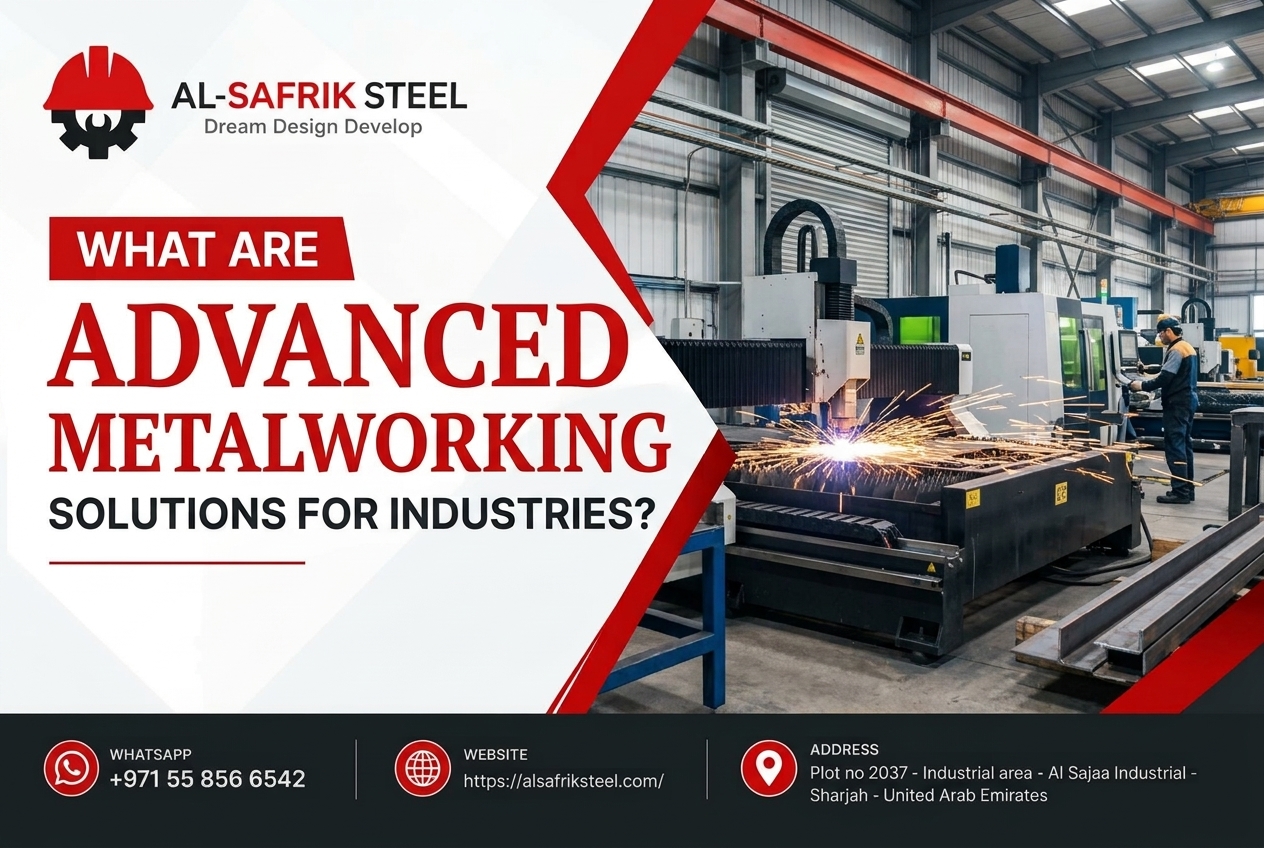
CNC plasma cutting is a computer-controlled metal cutting process that uses a high-temperature plasma arc to cut electrically conductive materials. The machine follows a programmed cutting path, allowing metal sheets and plates to be shaped according to digital designs.
This process is particularly useful when projects require specific profiles, shapes, and dimensions. Instead of relying entirely on manual cutting, the CNC system controls the movement of the cutting equipment according to the programmed instructions.
CNC plasma cutting in the UAE is an important option for industrial businesses that require accurately cut metal components. It offers flexibility in producing different shapes while supporting repeatability across multiple pieces.
CNC Plasma Cutting for UAE Industries:
Businesses operating in Dubai Industrial City, Jebel Ali, Mussafah, Sharjah Industrial Area, and other industrial locations may require accurately cut metal components for different applications.
A properly planned cutting process helps meet project specifications and supports production consistency. Providing clear drawings, material details, and required quantities makes it easier to determine the cutting requirements before work begins.
5. Lathe Machine Work: Producing Accurate Rotational Components:
Lathe machine work is an important part of industrial metalworking because it allows manufacturers to shape metal workpieces through controlled rotation. A lathe holds the material and rotates it against a cutting tool, gradually removing excess material until the required dimensions and shape are achieved.
This process is commonly used for cylindrical and rotational components. Depending on the design, it can produce different diameters, grooves, shoulders, and other features. The accuracy of the finished component depends on correct measurements, proper workpiece positioning, suitable cutting tools, and the operator’s understanding of the required specifications.
Lathe machine work in the UAE is useful for businesses that require customized metal components for machinery and industrial applications. It provides a practical method for manufacturing parts that must match specific dimensions.
Why Is Lathe Machine Work Important?
Lathe operations help manufacturers produce components with controlled dimensions and specific surface profiles. They are particularly useful when industrial applications require accurately shaped rotational parts.
For example, a manufacturer may need a cylindrical component that fits into an existing machine assembly. Its diameter, length, and surface characteristics must be appropriate for the intended application. Accurate lathe machining helps achieve these requirements.
The process also contributes to producing steel fabricated products that include rotational features. When the machining process follows the approved measurements, it helps improve component consistency and compatibility.
Choosing the Right Metalworking Partner in the UAE
Finding a suitable metalworking partner is an important decision for construction companies, manufacturers, contractors, and industrial businesses. The right provider should understand the relationship between material specifications, manufacturing techniques, and the final application.
Al Safrik Steel provides the five metalworking capabilities discussed in this article, including machine shop, steel fabrication, turning workshop, CNC plasma cutting, and lathe machine work. These services address different requirements involved in preparing and machining metal components for industrial applications. Businesses seeking steel fabricated products should consider the importance of accurate specifications and suitable manufacturing processes when discussing their requirements.
A reliable working relationship also depends on communication. Discussing project expectations, reviewing technical information, and confirming manufacturing details before production can help reduce misunderstandings and support smoother project execution.
Conclusion
Metalworking plays an essential role in modern industrial production. From shaping individual components to preparing metal profiles according to technical drawings, different manufacturing processes help businesses meet their specific requirements.
For companies operating across Dubai, Abu Dhabi, Sharjah, Ajman, and other Emirates, selecting appropriate metalworking solutions is important for achieving consistent production results. Al Safrik Steel offers these five capabilities for businesses looking for suitable metalworking solutions in the UAE. By focusing on project specifications, material requirements, and manufacturing accuracy, industrial buyers can make better decisions when sourcing customized metal components.
Frequently Asked Questions
What are steel fabricated products?
Steel fabricated products are metal components manufactured by shaping and processing steel according to specific dimensions and designs. They are used in construction, engineering, manufacturing, and various industrial applications.
What is the purpose of a machine shop?
A machine shop provides an environment for machining metal components using specialized machinery. It helps produce parts with specific dimensions, shapes, and surface characteristics according to technical requirements.
How does CNC plasma cutting work?
CNC plasma cutting uses a computer-controlled plasma arc to cut electrically conductive metals. The machine follows programmed instructions to produce specific shapes and profiles from metal sheets or plates.
What is the difference between turning and lathe machine work?
Turning refers to the machining process in which a rotating workpiece is shaped using a cutting tool. Lathe machine work describes operations performed using a lathe machine to achieve the required dimensions and profiles.
Why is precision important in metalworking?
Precision helps ensure that manufactured components meet their required measurements and fit their intended applications. Accurate machining and cutting also help maintain consistency and reduce production errors.
