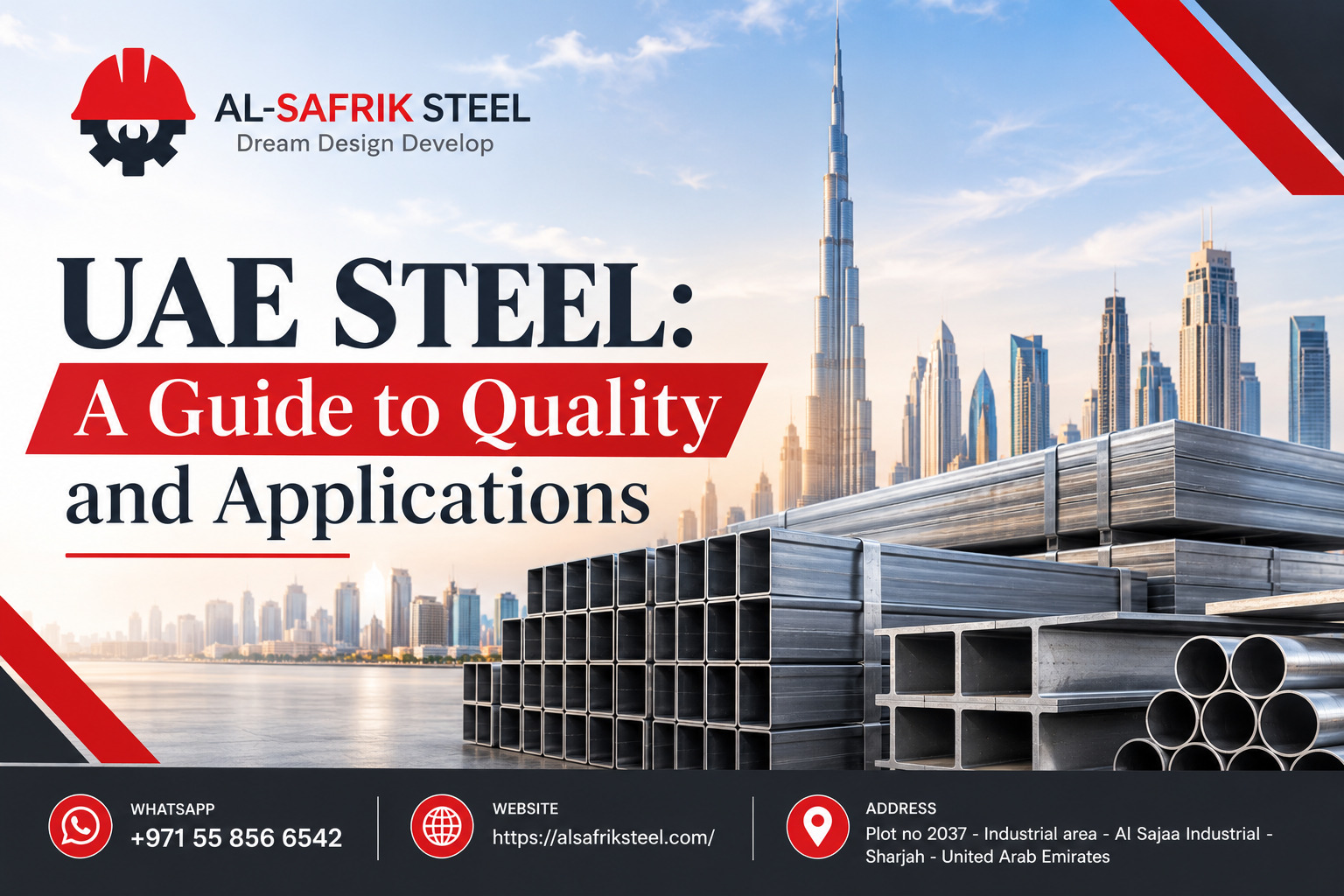
UAE Steel is an essential material in Emirati construction, manufacturing, infrastructure, and industrial sectors. From large commercial developments in Dubai to industrial facilities in Abu Dhabi and logistics centers in Sharjah, steel products support a wide range of operations. Their strength, durability, and flexibility make them suitable for applications that require dependable performance under demanding working conditions.
However, choosing the right steel involves more than comparing prices or selecting a particular material. Buyers must consider material grades, dimensions, load requirements, fabrication quality, corrosion protection, and the intended application. These factors influence product reliability, service life, maintenance requirements, and overall project costs.
Understanding UAE steel products and their applications helps contractors, engineers, procurement teams, and industrial operators make informed decisions. Whether a project requires structural components, pipe supports, steel pallets, or material-handling equipment, Al Safrik Steel prioritizes quality throughout the selection process.
UAE Steel: What Defines Quality in Steel Products?
Quality steel is not determined by appearance alone. A clean surface and professional finish are useful indicators, but the material must also meet the technical requirements of its application. When evaluating UAE steel, buyers should consider several important quality factors.
1. Material Grade and Composition:
Steel grades differ in chemical composition and mechanical properties. These differences affect strength, hardness, ductility, weldability, and resistance to particular environmental conditions. Carbon steel is commonly used in structural components, supports, frames, and industrial equipment. Stainless steel may be appropriate where corrosion resistance, hygiene, or appearance is especially important. The material grade should match the approved drawings and engineering specifications. Choosing a material solely based on price can cause problems if it does not meet the project’s load or environmental requirements.
2. Strength and Load Capacity:
Most steel components used in industrial environments may carry substantial loads or undergo repeated movement. Their design must account for the forces they will encounter during operation. Quality UAE steel fabrication begins with understanding these requirements before production starts. Engineers and fabricators must consider material thickness, component geometry, connections, and the expected operating conditions.
3. Dimensional Accuracy:
Dimensions influence how easily a fabricated component fits into an existing system. Incorrect measurements can cause alignment problems, installation delays, or interference with nearby equipment. Manufacturers should follow approved drawings and specified tolerances. Critical dimensions may require inspection during production and before delivery. Dimensional accuracy is particularly important for pipe supports, forklift attachments, steel pallets, precast concrete molds, and other products designed to fit specific equipment or site arrangements.
4. Welding and Fabrication Quality:
Welding joins steel components and helps create frames, brackets, supports, and equipment. Poor welding can weaken a component, introduce defects, or reduce its ability to perform under load. Fabrication quality depends on suitable welding procedures, trained personnel, proper preparation, and inspection. Where the project requires it, visual examination and additional non-destructive testing can help identify defects.
5. Surface Protection and Finishing:
Steel can corrode when exposed to moisture, oxygen, salts, or certain chemicals. Surface preparation and suitable protective coatings help reduce this risk. The appropriate treatment depends on the operating environment. Outdoor installations, coastal facilities, and industrial locations may need different protection measures from equipment used inside a dry warehouse. Top-quality UAE steel products should therefore be evaluated according to both their underlying material properties and their surface protection requirements.
Major Applications of UAE Steel Across the Region
Steel has a broad range of applications because it can be manufactured into products for construction, storage, lifting, and industrial operations. Some of the common applications include:
1. Construction and Structural Applications:
Construction projects use steel in supporting frameworks, platforms, brackets, staircases, barriers, and other fabricated components. Its strength and ability to be formed into different shapes make it suitable for numerous building and infrastructure requirements. In Dubai and Abu Dhabi, steel components may be used in commercial properties, industrial buildings, warehouses, and infrastructure-related projects. Their suitability depends on the engineering design, installation conditions, and applicable building requirements. Steel fencing and barriers can also define boundaries, guide movement, and help protect selected areas. The design should reflect the intended use, site layout, and expected exposure.
2. Industrial Pipe Supports:
Piping systems require proper support to manage the weight of pipes, contents, insulation, and connected equipment. Supports also help accommodate movement caused by temperature changes and operating conditions. Common products include pipe saddles, clamps, brackets, hangers, and rollers. Their design depends on pipe dimensions, support spacing, loads, and the movement permitted by the system. In oil and gas facilities, manufacturing plants, and other industrial locations, correctly selected supports help maintain alignment and reduce unnecessary stress on piping components.
3. Material Handling Equipment:
Warehouses, factories, construction sites, and logistics facilities need equipment to move, store, and position materials efficiently. UAE steel products used for these activities include pallets, trolleys, loading ramps, storage cages, spreader beams, and suitable forklift attachments. Each product serves a specific purpose and must be selected according to its intended load and operating conditions. For example, a loading ramp must support the expected vehicle or equipment load, while a steel trolley must be suitable for the materials it will carry. Lifting attachments require particular attention to rated capacity, compatibility, inspection, and safe operating procedures.
4. Manufacturing and Industrial Operations:
Most manufacturing facilities depend on steel components for equipment frames, storage systems, work platforms, supports, and customized products. Fabricated steel can be adapted to fit the dimensions and layout of a production facility. This is useful when standard components do not meet a project’s requirements. For businesses seeking UAE steel solutions, clearly defined drawings and specifications help manufacturers understand the intended application and produce components that fit the operational environment.
5. Precast Concrete Production:
Precast concrete manufacturing uses molds to produce concrete elements in controlled shapes and dimensions. Steel molds can be designed for products such as blocks, beams, columns, and road barriers. The mould design must account for the concrete product’s dimensions, handling requirements, and production process. Durable construction and suitable fabrication can help maintain shape consistency across repeated production cycles.
6. Underground Utilities and Concrete Structures:
Puddle flanges are used where pipes pass through concrete walls, foundations, or other structures that need protection against water penetration around the pipe opening. Their dimensions and design must match the pipe and the surrounding construction. Correct positioning during installation is important because an unsuitable or incorrectly installed flange may not provide the intended sealing performance.
Moreover, all these specialized steel products demonstrate why material selection should be based on the specific application rather than on a general preference for a single product type.
Quality Control in UAE Steel Fabrication
Quality control should be considered throughout the manufacturing process rather than only at the final inspection stage.
Material Verification:
The manufacturer should confirm that the supplied material matches the required grade and dimensions. Depending on the project, material certificates and traceability records may be necessary. These checks help ensure that the material used in production is consistent with the approved specifications.
Cutting and Assembly:
Accurate cutting and proper assembly are essential to achieve the intended dimensions. Incorrect cuts can affect alignment, while unsuitable assembly can introduce stresses or prevent components from fitting together correctly. For customized UAE steel products, checking dimensions against approved drawings helps identify issues before the component reaches the installation site.
Welding Inspection:
Welds should be appropriate for the joint design, material, and expected loads. Inspection requirements vary according to the product and project specifications. Some components may require visual inspection, while safety-critical or highly loaded products may require additional examination. The inspection method should be selected according to applicable requirements rather than applied uniformly to every product.
Final Inspection:
Before delivery, finished products should be checked against the agreed specifications. Relevant checks may cover dimensions, weld appearance, surface finish, component completeness, and identification markings. For industrial equipment, the inspection may also include verification of capacity, compatibility, or other product-specific requirements.
Consistent quality checks help businesses receive products that are better suited to their intended applications and reduce avoidable problems during installation or operation.
Steel Requirements in Major UAE Locations:
Different locations have different project requirements, even when the same product category is involved. The most demanding cities and areas include:
- Dubai
- Abu Dhabi
- Sharjah
- Ajman, Ras Al Khaimah, and Fujairah
Across these locations, the right UAE steel solution depends on the individual project’s purpose, specifications, and operating environment. Geographic location is important, but it should not replace a proper technical assessment.
Why Work With An Experienced Steel Fabricator For UAE Steel Products?
As an experienced steel fabricator in the UAE, Al Safrik Steel can help translate technical requirements into practical products. The process typically begins with understanding the application, reviewing drawings, confirming specifications, and identifying suitable fabrication methods.
Our experienced team evaluates, communicates clearly, explains relevant technical limitations, and confirms what can be delivered. We offer fabricated industrial products and material-handling equipment for customers in the UAE. Businesses can order a customized range of UAE steel products, including pipe supports, steel pallets, loading ramps, steel trolleys, spreader beams, forklift hook attachments, puddle flanges, and precast concrete molds. The company’s product information can help buyers identify options relevant to their industrial requirements.
The selection process should remain focused on the application and specifications. Not every product is appropriate for every facility, so customers should confirm the availability, dimensions, capacities, and technical details of the particular item they need.
Conclusion
UAE steel remains an important material for construction, manufacturing, industrial facilities, and material-handling operations throughout the Emirati region. Its versatility allows it to be manufactured into structural components, pipe supports, storage products, lifting attachments, and specialized equipment.
The quality of the finished product depends on the correct material grade, accurate dimensions, appropriate fabrication methods, effective corrosion protection, and suitable inspection. By clearly defining project requirements and carefully evaluating suppliers, businesses can select steel products from Al Safrik Steel that are designed to meet operational needs and deliver dependable performance over time.
Frequently Asked Questions
What factors determine the quality of UAE Steel?
The quality of UAE steel depends on its material grade, mechanical properties, dimensional accuracy, fabrication quality, welding, and corrosion protection. Buyers should also confirm that the product meets the technical requirements of its intended application.
Which industries use steel products in the UAE?
Construction, manufacturing, logistics, warehousing, and industrial facilities use steel products for structural components, pipe supports, storage, lifting, and material handling. The appropriate product depends on the project’s requirements.
How can I choose the right UAE steel product for my project?
Start by identifying the intended application, required dimensions, load capacity, environmental conditions, and relevant technical standards. Compare suppliers based on specifications, fabrication quality, inspection procedures, and total cost.
Why is corrosion protection important for steel products?
Moisture, coastal salt, and certain chemicals can cause corrosion. Suitable coatings, appropriate material selection, and regular inspection can help protect UAE steel products and support their service life.
Where can businesses source fabricated steel products in the UAE?
Businesses can approach manufacturers that offer products suited to their technical and operational requirements. Al Safrik Steel brings a wide range of industrial fabrication and material-handling products, allowing buyers to review relevant options and confirm specifications before ordering.
