
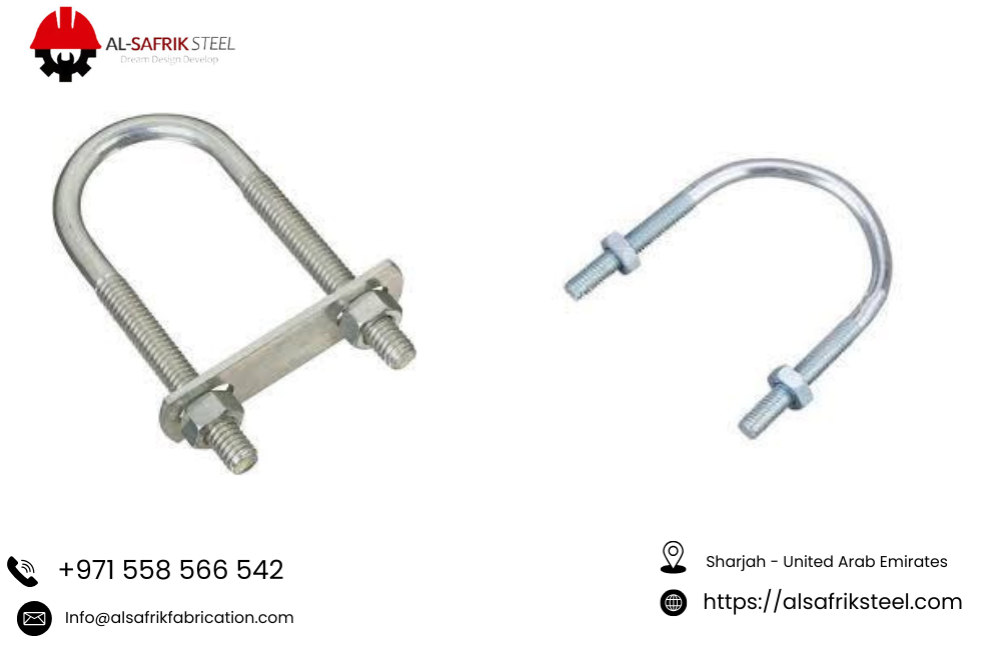
In construction, industrial manufacturing, and infrastructure development across Dubai and the wider UAE, the reliability of structural connections is not a secondary concern, but it’s foundational. Every pipeline, scaffolding system, support frame, and mechanical installation depends on the integrity of the components holding it together. Among those components, pipe and clamp solutions are easy to overlook until something goes wrong; in high-stakes environments, that is precisely when the quality of these fittings makes itself known.
Pipe clamp fittings and structural pipe connectors have evolved considerably over the past decade. What was once a relatively straightforward category of industrial hardware has evolved into a sophisticated range of engineered solutions tailored to specific load requirements, environmental conditions, and safety standards. For engineers, project managers, and procurement teams working on projects across Dubai, Sharjah, Abu Dhabi, and throughout the UAE, understanding how these systems work and why quality matters is genuinely important, not just technically, but commercially.
Through this article, we will examine how pipe and clamp systems contribute to structural safety and mechanical strength, what factors determine their performance, and what to consider when specifying them for projects in the Gulf region’s demanding operating environment.
What Are Pipe and Clamp Solutions and Where Are They Used?
Pipe clamp systems are mechanical fastening assemblies that connect, support, restrain, or join pipes, tubes, and structural members within a broader framework. They appear across an extraordinarily wide range of applications, from the scaffolding systems surrounding a high-rise construction project in Downtown Dubai to the process pipework running through an industrial facility in Jebel Ali, from handrail systems in commercial fit-outs to cable management frameworks in large infrastructure installations.
The common thread across all these applications is the need for a connection that holds reliably under the loads and conditions it will encounter throughout its service life. A pipe support clamp in a process plant must simultaneously resist vibration, thermal expansion, and the weight of the pipe and its contents. A scaffolding tube clamp on a construction site must handle dynamic loading from workers, equipment, and wind without slipping or deforming. The engineering requirements vary considerably between applications, but the underlying demand for dependable mechanical performance is consistent across all of them.
How Pipe Clamp Systems Enhance Structural Safety?
1. Preventing Movement and Maintaining Alignment:
One of the primary safety functions of pipe clamps and fittings is restraining movement in systems that would otherwise shift, vibrate, or drift out of alignment under operational conditions. In process pipework carrying fluids under pressure, uncontrolled movement creates stress concentrations at joints and welds that accumulate over time. Eventually, they lead to fatigue failures that can be catastrophic in industrial environments.
Pipe support systems that incorporate correctly specified clamps distribute these forces along the pipe run, preventing the localized stress accumulation that causes premature failure. In industrial zones where process plants and manufacturing facilities operate under demanding conditions including high ambient temperatures and occasional seismic activity, this load distribution function is particularly critical to long-term operational safety.
2. Resisting Vibration-Induced Fatigue:
Vibration is one of the most insidious causes of structural failure in piping and mechanical systems. Pumps, compressors, HVAC equipment, and fluid flow itself all generate vibration that transmits through connected pipework. Without adequate pipe clamping solutions, this continuous low-level movement progressively fatigues metal at connection points, loosens fasteners, and eventually compromises the integrity of the entire system.
Quality vibration-resistant pipe clamps incorporate design features that dampen transmitted vibration. In contrast, rubber-lined versions absorb and dissipate vibrational energy rather than passing it directly into the pipe wall. For mechanical and HVAC installations in commercial buildings across Business Bay, DIFC, and Dubai Marina, this capability directly affects both the longevity of the installation and the acoustic comfort of the occupied space above.
3. Providing Load-Rated Structural Support:
Heavy-duty pipe clamps used in structural applications must be specified with clear load ratings that account for the full range of forces the installation will experience. This includes static loads from the weight of the pipe and its contents, dynamic loads from fluid pressure and flow, thermal loads from expansion and contraction, and, in some cases, wind and seismic loads for external installations.
Properly engineered pipe support clamp systems carry certified load ratings that give engineers confidence in their structural calculations. Using uncertified or incorrectly rated hardware in load-bearing applications is one of the most common sources of safety risk in construction and industrial projects. It’s a risk that quality specification and procurement processes are designed to eliminate.
How Clamp Solutions Contribute to Mechanical Strength?
Distributing Forces Across Connection Points:
A fundamental principle of structural engineering is that concentrated forces are more damaging than distributed ones. Pipe clamp fittings, when correctly designed and positioned, distribute the forces acting on a pipe run across multiple support points rather than allowing them to concentrate at a single location. This distribution dramatically improves the effective strength of the overall system relative to what the individual pipe material alone could sustain.
In scaffolding applications, tube-and-clamp systems use this principle to build temporary structures capable of supporting significant loads from multiple workers, tools, and materials simultaneously. The strength of the completed scaffold comes not from the individual tubes, which are relatively lightweight steel sections, but from the network of clamp connections that transform those individual members into a rigid, load-sharing structural system.
Maintaining Connection Integrity Under Thermal Cycling:
The climate of the region presents a specific challenge for outdoor and semi-outdoor installations: significant daily and seasonal temperature variation that causes metal components to expand and contract repeatedly throughout their service life. Over time, this thermal cycling can loosen fasteners, create gaps in connections, and reduce the clamping force that pipe bracket systems rely on to maintain their grip.
Quality stainless steel pipe clamps and carbon steel alternatives with appropriate protective coatings are engineered to maintain their clamping force across the temperature range encountered in operating conditions. Material selection and surface treatment are therefore not merely cosmetic decisions; they directly affect the long-term mechanical performance of the connection.
Corrosion Resistance in Coastal and Industrial Environments:
The UAE’s coastal geography and industrial activity create an operating environment that is highly conducive to ferrous metals. Salt air from the Arabian Gulf, high humidity, and chemical exposure in industrial zones all accelerate corrosion; corroded pipe clamps and hangers lose clamping force and structural integrity, eventually failing.
Stainless steel pipe clamps, particularly grades 304 and 316, offer superior corrosion resistance for applications in coastal locations and chemically aggressive environments. Hot-dip galvanized and epoxy-coated alternatives provide cost-effective corrosion protection for less demanding outdoor applications. Matching the material specification of pipe support hardware to the actual environmental conditions of the installation site is one of the most important decisions in the specification process.
Key Factors When Selecting Pipe and Clamp Systems for UAE Projects
Selecting the right pipe clamping solution for a project in Dubai requires consideration of several interconnected factors, including:
- Load requirements
- Pipe material and diameter
- Operating temperature
- Vibration exposure
- Environmental conditions
- Applicable standards all influence the correct specification.
Industry standards, including those from the American Society of Mechanical Engineers (ASME), the British Standards Institution (BSI), and local UAE regulatory requirements, provide the framework within which pipe support systems must be designed and tested. Working with suppliers who can demonstrate compliance with these standards and provide the documentation to prove it is essential. They are essential for projects that require regulatory sign-off.
The relationship between pipe clamp quality and project outcome is direct and measurable. Inferior hardware that fails prematurely creates not just the cost of replacement but the far greater costs of downtime, remediation, and potential liability in the event of a safety incident.
Al Safrik Steel supplies a comprehensive range of pipe and clamp solutions suited to the full spectrum of construction and industrial applications across all zones. It includes material certifications, load ratings, and technical support available for project specification requirements.
Practical Applications Across Dubai’s Construction and Industrial Sectors
The range of applications for pipe clamp systems in the active project landscape is broad. Commercial high-rise developments require extensive MEP pipework support systems throughout their structure. Industrial facilities in the Jebel Ali Free Zone depend on certified heavy-duty pipe supports for process pipework. Infrastructure projects, including water treatment, district cooling, and utility distribution across the emirate, all rely on correctly specified pipe hangers and clamps to maintain system integrity over decades of operation.
In each of these contexts, the cost of the pipe support hardware represents a small fraction of the total project value. However, its performance has an outsized influence on the safety and longevity of the installation it supports. This asymmetry is precisely why experienced project teams treat pipe clamp specification as a technical decision rather than a procurement cost-saving opportunity.
Al Safrik Steel has supplied pipe support and structural clamping solutions to projects across Dubai, Abu Dhabi, and Sharjah, and has supported contractors, MEP specialists, and industrial operators with product selection, technical documentation, and reliable supply throughout the project lifecycle.
Frequently Asked Questions
What is the difference between a pipe clamp and a pipe hanger?
A pipe clamp grips and restrains a pipe directly, while a pipe hanger suspends it from above using a rod or bracket. Both serve support functions but in different orientations and load directions.
How do I know which pipe clamp load rating I need for my project?
Load rating selection should be based on pipe weight, contents, operating pressure, thermal expansion, and any dynamic or seismic loads; a structural engineer should confirm the specification for critical applications.
Are stainless steel pipe clamps necessary for all outdoor installations in the UAE?
Not always but hot-dip galvanized clamps suit many outdoor applications, but coastal locations and chemically aggressive environments typically warrant stainless steel grade 304 or 316 for long-term corrosion resistance.
Can pipe-and-clamp systems be used for both permanent and temporary structures?
Yes, tube-and-clamp systems are widely used for temporary scaffolding and formwork. At the same time, other clamp types are engineered specifically for permanent structural and process pipework installations.
What standards should pipe clamp systems comply with for projects in Dubai?
Projects in Dubai typically reference ASME, BS, or EN standards for pipe supports, along with any specific requirements from the Dubai Municipality or the relevant free zone authority governing the project site.
